Gaming Parties!
1 / 3
Site Pages
The Wii U is a home video game console developed by Nintendo, and the successor to the Wii. The console was released in November 2012 and was the first eighth-generation video game console, as it competed with Sony's PlayStation 4 and Microsoft's Xbox One. The Wii U is the first Nintendo console to support HD graphics. The system's primary controller is the Wii U GamePad, which features an embedded touchscreen, and combines directional buttons, analog sticks, and action buttons. The screen can be used either as a supplement to the main display (either providing an alternate, asymmetric gameplay experience, or a means of local multiplayer without resorting to a split screen), or in supported games, to play the game directly on the GamePad independently of the television. The Wii U is backward compatible with all Wii software and accessories – games can support any combination of the GamePad, Wii Remote, Nunchuk, Balance Board, or Nintendo's more traditionally designed Classic Controller or Wii U Pro Controller for input. Online functionality centers around the Nintendo Network platform and Miiverse, an integrated social networking service which allows users to share content in game-specific communities. The Wii U was met with a generally positive reception, including praise for its GamePad controller, improvements to online functionality over the Wii, backwards compatibility with existing Wii software and controllers, affordability in comparison to other eighth-generation consoles, and non-reliance on a subscription for online functionality. However, the Wii U received criticism in several areas, including the GamePad's battery life and issues with the console's user interface and functionality, along with a weak lineup of launch titles and a lack of clear vision. The Wii U was met with slow consumer adoption, with low sales primarily credited to a weak lineup of launch titles, third-party support, and marketing reasons. Wii U production officially ended in January 2017. On March 3, 2017, Nintendo released a new flagship home console, the Nintendo Switch, although the Wii U was noted for pioneering several concepts that were refined in the Switch.
The Nintendo Switch is the seventh major video game console developed by Nintendo. Known in development by its codename NX, it was unveiled in October 2016 and was released worldwide on March 3, 2017. Nintendo considers the Switch a "hybrid" console: it is designed primarily as a home console, with the main unit inserted onto a docking station to connect to a television. Alternatively, it can be removed from the dock and used similarly to a tablet computer through its LCD touchscreen, or placed in a standalone tabletop mode visible to several players. The Nintendo Switch uses the wireless Joy-Con controllers, which include standard buttons and directional analog sticks for user input, motion sensing, and high-definition tactile feedback. The Joy-Con can attach to both sides of the console to support handheld-style play, connect to a Grip accessory to provide a traditional home console gamepad form, or be used individually in the hand like the Wii Remote and Nunchuk, supporting local multiplayer modes. The Nintendo Switch's software supports online gaming through standard Internet connectivity, as well as local wireless ad hoc connectivity with other Switch consoles. Nintendo Switch games and software are available on both physical flash-based ROM cartridges and digital distribution via Nintendo eShop; the system does not use region locking. The Nintendo Switch competes on the console gaming market with contemporaries being Sony's PlayStation 4 and Microsoft's Xbox One. The concept of the Switch came about as Nintendo's reaction to several quarters of financial losses into 2014, attributed to poor sales of its previous console, the Wii U, and market competition from mobile gaming. Nintendo's then-president Satoru Iwata pushed the company towards mobile gaming and novel hardware. The Nintendo Switch's design is aimed at a wide demographic of video game players through the multiple modes of use. Nintendo opted to use more standard electronic components, such as a chipset based on Nvidia's Tegra line, to make development for the console easier for programmers and more compatible with existing game engines. As the Wii U had struggled to gain external support, leaving it with a weak software library, Nintendo preemptively sought the support of many third-party developers and publishers to help build out the Switch's game library alongside Nintendo's own first-party titles, including many independent video game studios. While Nintendo initially anticipated around 100 titles for its first year, over 320 titles from first-party, third-party, and independent developers were released by the end of 2017. The console shipped nearly three million in the first month of its launch, exceeding Nintendo's initial projection of two million, and within a year of release achieved over 14 million units sold worldwide, outselling total lifetime sales of the Wii U. Since then, it has sold nearly 17.8 million units. It is the fastest-selling console in Nintendo's history, and is the fastest-selling console of all time in Japan and the United States. Nintendo Switch sales were highly tied to the critically acclaimed titles The Legend of Zelda: Breath of the Wild, Mario Kart 8 Deluxe, and Super Mario Odyssey, which became best-sellers for the system, with over eight, nine, and ten million copies sold respectively by March 2018.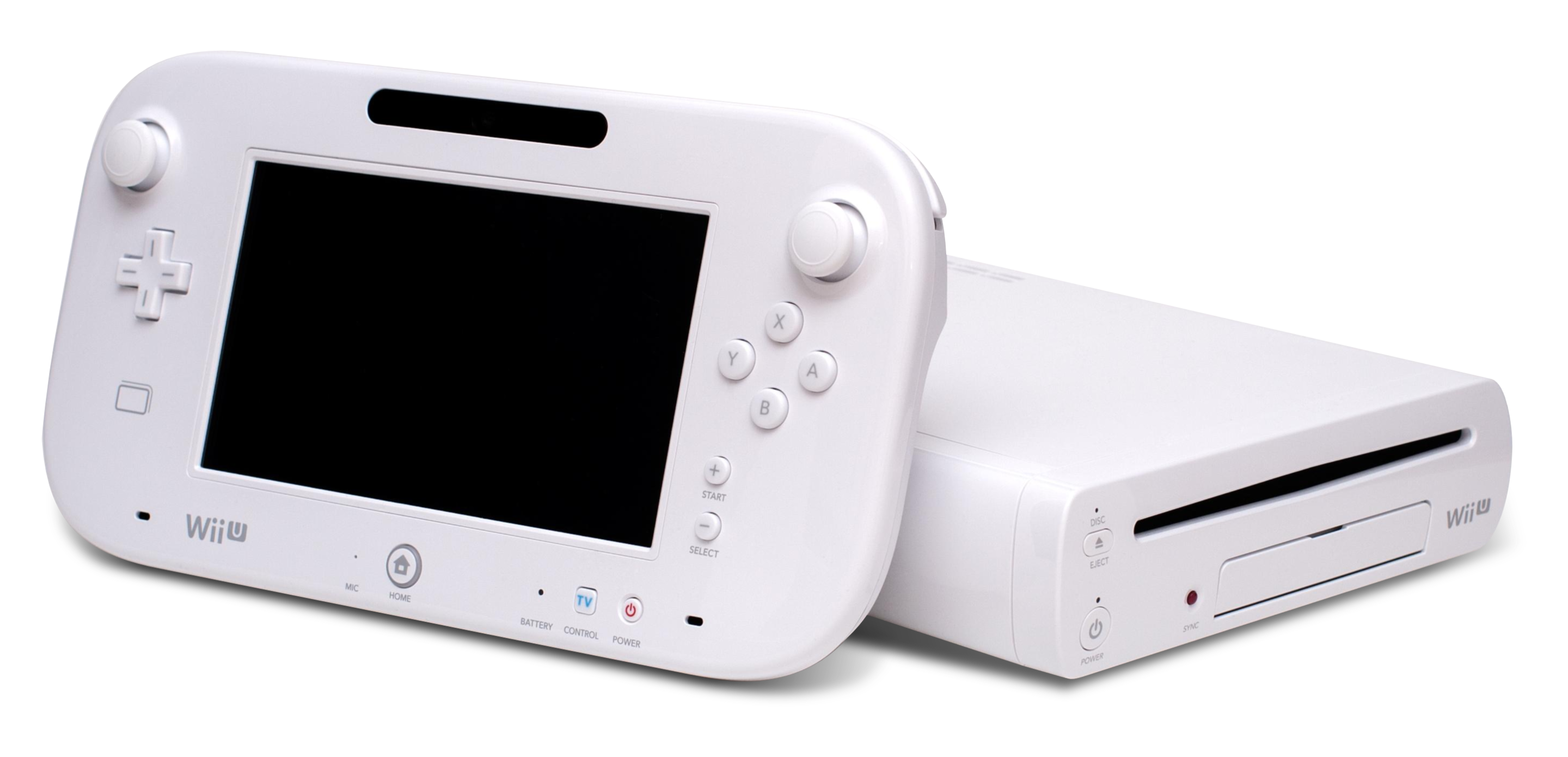
A Wii U Console with a Wii U gamepad (right)
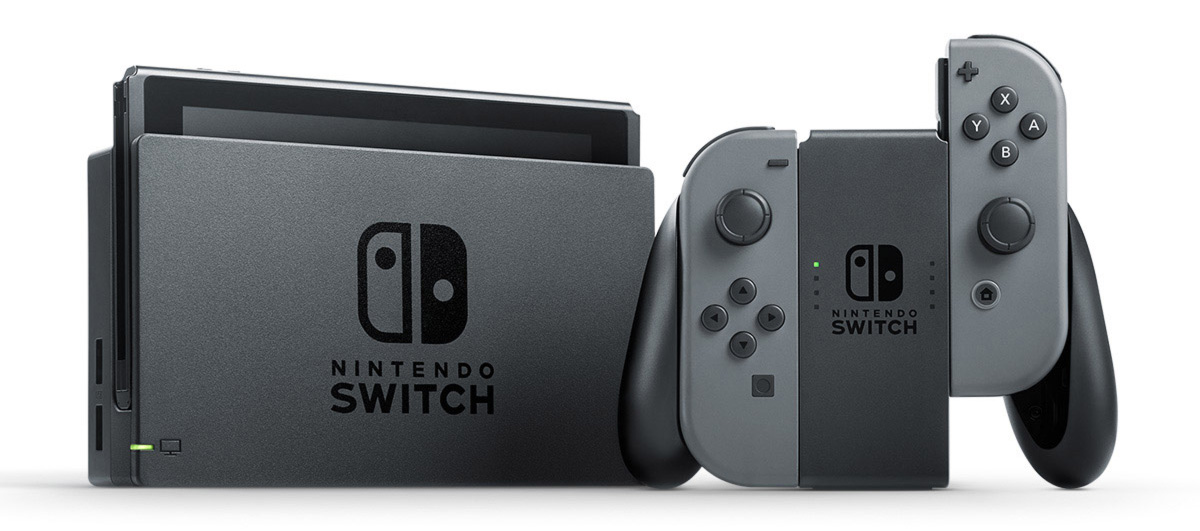
A Nintendo Switch console with grey Joycon controllers (right)